Sleep Guides · Organic Crib Mattresses
Organic Crib Mattress Materials: What Parents Should Compare
A mattress label can tell you what a product is made from, but it cannot answer every question that matters in an infant’s sleep space. Compare materials alongside firmness, construction, dimensions, fit, care instructions, and current safe-sleep guidance. The most useful choice is not the one with the most evocative list of natural fibers; it is the one that meets applicable safety requirements and fits the crib securely.
Published October 18, 2026
Start with the sleep surface, not the adjective
“Organic” can be a meaningful description of particular materials or production practices, but it is not a complete safety specification. A mattress may use organic cotton in its cover, for example, while its core, seams, waterproof layer, or other components are made from different materials. Product descriptions also vary in how precisely they explain those distinctions.
That makes a careful comparison less like choosing a color palette and more like reading a small, practical dossier. Look for a clear materials list, the structure of the core, the finished mattress dimensions, its intended use, and the certifications or test claims that apply to the finished product. If a detail is not stated, do not assume it from a headline, a photograph, or the presence of a single certified fiber.
Most importantly, materials are only one part of infant sleep safety. The American Academy of Pediatrics (AAP) recommends placing babies on their backs for every sleep, on a firm, flat, non-inclined surface intended for infant sleep, with only a fitted sheet in the sleep area. Follow current guidance from the AAP, the U.S. Consumer Product Safety Commission (CPSC), and the product manufacturer. A particular fiber, label, or price point is not a substitute for these basics.
What “organic” can—and cannot—tell you
Organic claims usually relate to the way a specified agricultural material is produced and processed, or to a defined portion of a textile supply chain. They do not automatically describe every component of a mattress. Cotton, wool, and other natural fibers may be described as organic, while the mattress can also contain fasteners, fire barriers, adhesives, waterproof membranes, or a core made from another material.
Read the claim closely. Does it apply to the cover, the filling, a particular fiber, or the complete product? Is there a named certification, and does the seller explain its scope? A certification mark may be useful evidence when its standards and product coverage are clear, but it should not be treated as a universal seal for infant safety, allergy prevention, chemical-free construction, or improved sleep.
For textile claims, parents may encounter standards such as the Global Organic Textile Standard (GOTS). Certification details matter: confirm whether the certification applies to the material or product being considered, and check the certifier’s own information rather than relying only on broad marketing language. Different programs address different parts of production. They are not interchangeable, and none makes it unnecessary to assess crib fit, firmness, or compliance with relevant product requirements.
Be especially cautious with absolute phrases such as “non-toxic,” “chemical-free,” or “completely safe.” All physical materials are made of chemicals in the scientific sense; such wording often lacks a precise, verifiable definition. Ask what the claim means, which component it describes, and what documentation supports it. A transparent explanation is more informative than a dramatic promise.
Compare the components separately
A crib mattress is a layered object. Its cover, core, seams, and any barrier or treatment can each influence how it is made and cared for. A short comparison chart can help make product descriptions more legible:
- Cover: Identify the fabric and whether it is removable, washable, or intended to be wiped clean.
- Core: Find out whether it uses foam, springs, fiber fill, or another construction, and whether the manufacturer states the mattress’s intended use.
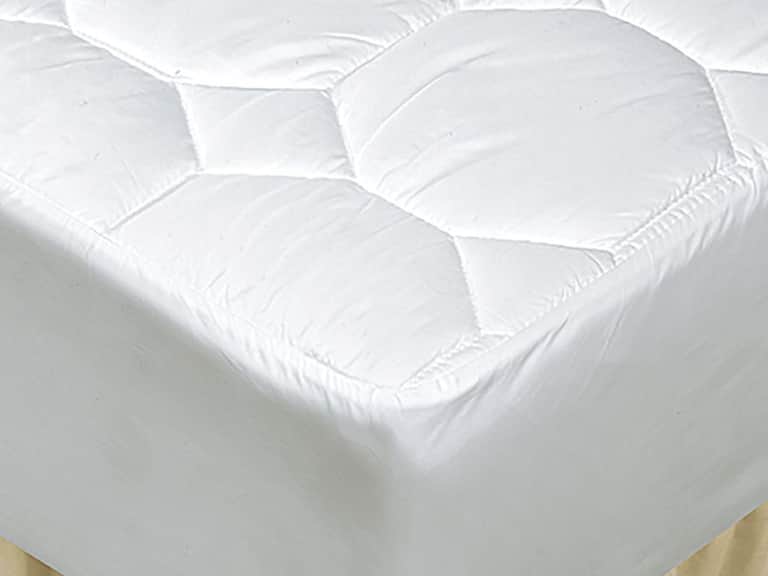
- Barrier or coating: Check whether waterproofing is included, how it is constructed, and what the care instructions permit.
- Seams and edges: Look for finished construction that remains intact and does not expose loose parts during normal use.
- Documentation: Note the specific certification, testing, or regulatory information provided, and what product components it covers.
These distinctions are practical rather than merely technical. A removable cover may simplify a particular cleaning task, but it must be used exactly as instructed and must not alter the mattress’s intended fit or firmness. A waterproof surface may help limit liquid penetration, but the product’s care directions still govern how it should be cleaned. A natural filling may appeal to families who prefer certain fibers, but the name of the material alone does not establish that the sleep surface is appropriate for an infant.
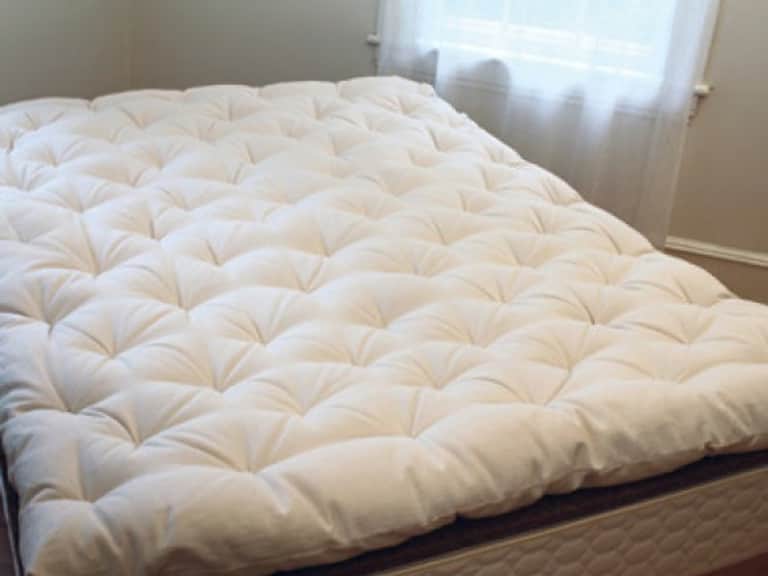
Likewise, “breathable” is not a replacement for safe-sleep practice. Do not use a soft topper, added pad, cushion, positioner, or extra layer to modify a crib mattress. The mattress should be used as designed, with a fitted sheet that is sized for it and no loose bedding or soft objects in the infant’s sleep space.
Materials parents may see on a label
Cotton
Cotton may appear in a cover, batting, or other textile layer. A label should clarify which role it plays and whether an organic claim applies specifically to that cotton. Cotton is a fiber description, not a complete account of the mattress’s construction. The fabric’s weave, finishing, stitching, and cleaning instructions can also matter to everyday use.
Wool
Wool can be used as a filling, layer, or component in a mattress design. Sellers may discuss its origin, processing, or temperature-related properties, but such descriptions should be read as material information rather than a guarantee that an infant will sleep more safely or comfortably. Confirm the product is specifically designed and labeled for crib use; an adult mattress, futon, or general-purpose wool pad is not a substitute for a crib mattress.
Foam
Foam mattresses differ in formulation, density, construction, and cover design. If foam is listed, look for the manufacturer’s description of the core and the finished product’s intended use. Do not infer firmness or safety from the word “foam,” from a claim about emissions, or from the mattress feeling comfortable to an adult. Infant sleep surfaces need to meet the applicable requirements for their product category.
Innerspring and composite constructions
Some mattresses use a spring-based core, while others combine materials in multiple layers. Ask how the layers are arranged and whether the information describes the complete mattress rather than only its outer fabric. With any construction, the relevant questions remain consistent: Is this a crib mattress intended for the particular crib? Does it meet applicable requirements? Is it firm, flat, undamaged, and the correct size?
There is no single material that every family must seek out. The sensible approach is to compare what is disclosed, understand the limits of each claim, and keep product safety and fit at the center of the decision.
Firmness is a safety question, not a comfort contest
For an infant, a mattress should be firm and flat, not plush or molded to the shape of the baby. The surface should retain its intended structure during use and should not have a slope or soft depression. A mattress that seems invitingly cushioned to an adult is not necessarily appropriate for an infant sleep space.
Firmness should not be judged by pressing a hand into the product and treating that informal test as a certification. Follow the manufacturer’s use instructions and product labeling, and check relevant CPSC information for current requirements. If a product’s description is vague about intended use, age range, or compliance, seek clarification before using it. Do not add a topper or pad to make a mattress feel softer, firmer, warmer, or more luxurious.
Secondhand mattresses deserve particular care. They may be worn, damaged, contaminated, incorrectly sized, or missing instructions and identifying information. A surface that has sagged, softened, or no longer fits securely should not be treated as suitable because it once belonged to a crib. When evaluating any mattress, assess its current condition and compatibility rather than relying on its age or reputation.
Crib mattress fit: measure twice
Even a well-made mattress is not suitable if it does not fit the crib correctly. Crib interiors and mattress dimensions must be compatible, and a visible gap at the edges can create a serious hazard. Do not assume that the words “standard size” settle the question: check the crib’s manual, the mattress specifications, and any applicable size requirements together.
Measure the crib interior according to its manufacturer’s directions, and compare that information with the mattress’s stated dimensions. Pay attention to whether the listed measurements refer to the finished product and whether the mattress is intended for that exact type of crib. When the mattress is in place, check that it lies flat and that its edges meet the crib structure as intended. If you see a gap, bending, buckling, or an uncertain fit, stop and contact the manufacturers for guidance rather than trying to fill the space with towels, blankets, foam, or improvised padding.
Also check mattress thickness and crib assembly instructions. Adjustable mattress-support positions should be used only as directed by the crib manufacturer, and the mattress should sit on the correct support. Do not modify the crib or mattress to make them fit. Keep the product labels and manuals available so dimensions and care information can be verified later.
- Confirm the crib model and consult its current manual.
- Compare the stated mattress dimensions with the crib’s requirements.
- Check the actual fit around the perimeter after the mattress is installed.
- Use only the mattress and support configuration approved for that crib.
- Do not use makeshift fillers to address gaps or an unstable fit.
Care instructions are part of the comparison
Parents naturally want a sleep surface that is practical to maintain. Before choosing, find out what the manufacturer permits: spot cleaning, wiping, machine washing of a removable cover, or another method. These instructions are not interchangeable. Washing a component that is not designed to be washed, using a harsh cleaning agent, or reinstalling a damp cover may damage the product or change how it fits.
Ask whether the care method applies to the entire mattress or only to a removable cover. Check how the cover is reattached and whether the manufacturer specifies a particular orientation. If a liquid reaches the core, follow the product’s directions rather than assuming it can be fully cleaned or dried at home. A waterproof cover can limit some exposure, but it does not make the mattress maintenance-free.
Inspect the mattress periodically for damage, loose fabric, broken seams, a changed shape, or signs that it no longer lies flat. Replace it if the manufacturer advises replacement or if it is damaged, contaminated in a way that cannot be addressed according to its instructions, or no longer fits the crib correctly. Keep the sleep space uncluttered: routine care does not call for adding loose blankets, pillows, pads, or toys to the crib.
How to read certifications and safety claims
Product pages can present an array of symbols and technical phrases. Slow down and identify precisely what each one means. A certification may concern organic fiber content, textile processing, emissions, or another defined standard; a test claim may apply to a particular substance or component. Neither should be assumed to cover every aspect of the finished mattress or its suitability for a specific crib.
For claims about compliance, consult the CPSC and the manufacturer’s documentation. In the United States, crib mattresses are subject to federal safety requirements, including standards covering dimensions and performance. Requirements and guidance can change, so current official information is preferable to an old blog post or a seller’s general assurance. If the product is sold in another country, consult that jurisdiction’s consumer-safety authority as well.
Questions worth asking include: What exact model is this? Which components are covered by the stated certification? Is the certification current and verifiable? What product category is it designed for? Does the manufacturer provide a manual and care instructions? Specific answers let parents compare like with like. A long list of claims without clear scope does not.
A calm, practical comparison checklist
When reviewing two or more organic crib mattresses, make a simple side-by-side list rather than relying on a single headline feature. This keeps the decision focused on details that can be checked.
- Intended use: Is the product explicitly designed as a crib mattress for infant sleep?
- Current safety information: Are relevant compliance details and product instructions available?
- Materials: Are the cover, core, filling, and barrier described separately?
- Organic scope: Which particular fiber or component is certified or claimed to be organic?
- Firm, flat surface: Does the product’s intended construction support the required type of sleep surface?
- Dimensions and fit: Does it match the crib manufacturer’s specifications without an unsafe gap?
- Care: Are cleaning and drying instructions clear and manageable for your household?
- Condition and support: Is the mattress new or in suitable condition, and does it work with the crib’s approved support?
- Documentation: Are the label, model details, manual, certification scope, and warranty terms accessible?
Think of price and sustainability claims as additional context, not as shortcuts through this checklist. A higher price does not itself establish a safer product, and a natural-material claim does not prove that a mattress fits a particular crib. The strongest comparison is a clear one: specific facts, verified against the intended use and the crib’s requirements.
Safe sleep remains the essential standard
Preparing an infant’s sleep space is not a styling exercise. Keep the crib bare except for a fitted sheet made for the mattress. Place the baby on their back for every sleep, and use a firm, flat, non-inclined surface intended for infant sleep. Do not add pillows, quilts, loose blankets, stuffed toys, positioners, or mattress toppers. Follow current recommendations from the AAP and guidance from the CPSC, as well as instructions for the crib and mattress.
If a baby has a medical condition or a caregiver has questions about an individual sleep situation, discuss them with a qualified health professional. General product information cannot replace individualized medical advice. Similarly, a manufacturer’s marketing copy should not be used to resolve uncertainty about a safety requirement; consult the relevant official authority or product manufacturer.
The most useful choice is the clearest one
Organic crib mattress materials can be worth comparing, particularly for families who want to understand where fibers come from and how a product is constructed. But the word “organic” does not answer every question, and there is no material label that can stand in for careful evaluation. Read the component list, distinguish certification from marketing language, verify the mattress’s intended use, and confirm its dimensions against the crib.
Then return to the non-negotiables: a firm, flat sleep surface, a secure fit, correct use, and an uncluttered crib. When material information is transparent and these essentials align, parents can make a more confident decision without mistaking luxury language or a single attractive claim for proof of safety.